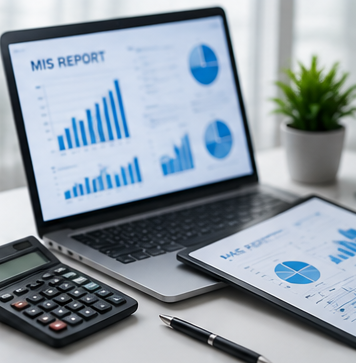
Why Every Business Needs MIS Reports
MIS (Management Information System) Reports help businesses collect, analyze, and present data for better decision-making. They provide management with accurate and timely information about business performance.
Benefits of MIS Reports
1. Better Decision Making
MIS reports provide real-time insights into sales, expenses, profits, and operations, helping management make informed decisions quickly.
2. Improved Financial Control
Businesses can monitor:
- Revenue and expenses
- Cash flow
- Profitability
- Budget performance
This helps identify financial issues before they become major problems.
3. Performance Monitoring
MIS reports track:
- Department-wise performance
- Employee productivity
- Sales targets
- Operational efficiency
Managers can easily identify areas that need improvement.
4. Enhanced Business Planning
Historical and current data helps businesses:
- Forecast future sales
- Plan budgets
- Allocate resources effectively
- Set realistic business goals
5. Increased Operational Efficiency
MIS reports highlight:
- Process bottlenecks
- Delays in operations
- Inventory shortages
- Resource utilization
This enables businesses to streamline operations and reduce costs.
6. Better Inventory Management
Businesses can monitor:
- Stock levels
- Fast-moving products
- Slow-moving inventory
- Reorder requirements
This prevents stock-outs and excess inventory.
7. Risk Identification
Regular MIS reporting helps identify:
- Declining sales
- Rising expenses
- Outstanding receivables
- Compliance issues
Early detection allows timely corrective action.
8. Improved Customer Satisfaction
By analyzing customer data, businesses can:
- Understand customer preferences
- Improve service quality
- Resolve complaints faster
- Increase customer retention